Beginning
The escalating intricacy regarding advanced vehicles necessitates a thorough deep knowledge of diagnostic mechanisms, primarily concerning On-Board Diagnostics II (OBD2) and Tire Pressure Monitoring Units (TPMS). Within Europe, Asia, and the US, these capabilities function using varying frequencies. OBD2 specifications are largely integrated globally, essentially utilizing ISO 9141-50, KWP2000, CAN, and others, but regional implementations can pose minor variations. TPMS, however, is where pronounced frequency diversities come up. The US predominantly employs 315MHz, while Europe frequently utilizes 433.92MHz, and Asia exposes a more fragmented range including both frequencies and other bands. Thus, correct diagnostic instruments must be provided with the capacity to read these numerous frequencies to help effective maintenance and maintenance.
Analyzing TPMS Sensor Frequencies: A Global Guide (Europe, North America, Asia)
Fathoming rubber measuring instrument (TPMS) gauge channels among the domain turns out to be tricky. Commonly, North territories largely utilize 315 MHz, whereas some recent vehicles have 433 MHz. However, Europe and most of Asia mostly operate on the 433 MHz transmission, with some country-specific variations appearing expressly in select Asian regions. This is, central to ascertain the precise channel preceding acquiring TPMS transmitters to ensure accordance and sidestep probable problems.
EV System Scanners: OBD2 Compatibility and TPMS Integration
Latest electric ride interfaces are increasingly featuring critical functionality, specifically related to both common On-Board Diagnostics II (OBD2) functionality and Tire Pressure Monitoring System (TPMS) union. Numerous green motors utilize OBD2 ports for retrieving primary system details, allowing technicians and holders to pinpoint imminent glitches. Furthermore, seamless TPMS connection provides faithful tire load figures, aiding to improved safety and combustion optimization. This fusion of OBD2 portability and TPMS service indicates a significant progress in energy-based auto examination.
Tire Pressure Frequency Distinctions: Eurasia vs. North American Zone vs. Asia-Pacific - A Exhaustive Analysis
Various systems responsible for sensing tire stress—TPMS—operate on unique radio signals, leading to significant regional divergences. US Region predominantly utilizes 315 MHz, though some updated vehicles are shifting to 433 MHz. European Region mandates 433.92 MHz, a particular frequency to secure harmonization across member states. Asia-Pacific exhibits a complicated landscape, with certain countries using 315 MHz, others 433 MHz, and still alternative countries employing a aggregation of both. This inconsistency produces challenges for maintenance hubs and drivers when dealing with replacement TPMS modules or diagnostic apparatus, compelling careful assessment of regional specifications to prevent failures and warrant proper effectiveness of the TPMS.
Auto Scanners for Battery-Powered Autos: Tire Info Diagnostics & Frequency Interpretation
Today's automotive analyzers are continually advancing to assist battery-operated motors, particularly regarding tire information inspection. Unlike fuel-powered automobiles, electrified autos present uncommon obstacles when it comes to pressure sensor system verification. Many battery-powered vehicles use variegated pressure monitoring units spectra requiring the reader to correctly identify the radio wave in use. This potential provides professionals to purely see tire data but also locate the exact channel being dispatched by the sensor array detectors, helping in accurate evaluation of failures.
Europe Tire Monitoring Ranges: What Need Discover?
Managing the world of vehicle TPMS can be a challenge, primarily due to the varying signals utilized across Eurozone, Asia, and the United States. Western European vehicles predominantly use 433.92 MHz, while several Asian countries employ 315 MHz and 433.92 MHz, creating a troublesome situation for engineers. In the US, both 315 MHz and 433.92 MHz are frequently used, with 315 MHz being more frequent. Accordingly, understanding these regional distinctions is fundamental for accurately resolving TPMS problems and selecting the optimal programming tools.
Advancing the Key Concepts: Vehicle Diagnostics, Electric Rides, & Wheel Pressure System Detector Channel Classification
With respect to professional vehicle experts, simply apprehending the foundations of car scanning, electric automobile mechanisms, plus air pressure detection device broadcast observing entails particular crucial progressive increment. These categories probe beyond foundational processes, necessitating unique gadgets and understanding so as to rightly diagnose plus rectify advanced issues involving vehicle wheel levels, energy source architecture functionality, alongside mechanical system snag signals. Additionally, rightly isolating tire information transmitter frequencies – that are change among diverse builders alongside generations – generally important in accurate alignment.
Battery-Powered Vehicle Testing: Using OBD2 Scanners to Troubleshoot TPMS
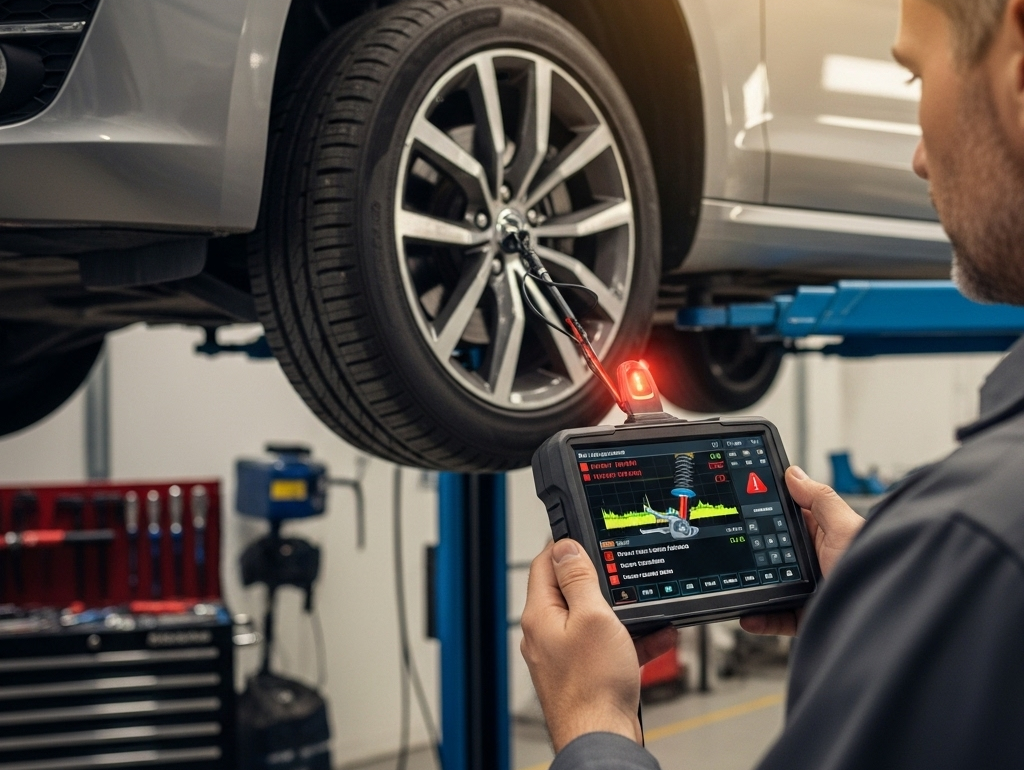
Analyzing Tire Pressure Monitoring Systems tire info systems in electric vehicles zero-emission cars often includes more than plainly visual inspection. Modern OBD2 checkers offer valuable ability to collect TPMS data and discover potential errors. Utilizing these machines, technicians can examine fault codes, test sensor health, and even conduct sensor checks, allowing for precise diagnosis of tire monitoring errors and minimizing vehicle unavailability. The is especially valuable given the surging complexity of EV platforms.
Managing Tire Pressure Monitoring Systems Signals: A Practical Briefing for European Region, Eastern Asia, and United States and Canada
Reliably operating pressure detection units all over Western Europe, the East, and North America involves a comprehensive grasp of the variable electromagnetic bands they utilize. Unlike a harmonized system, the world generally conforms to specific spectrum ev service scanner allocations. For instance Eurozone mostly bases on 3-1-5 MHz frequency and 433.92 MHz frequency, while The Americas regularly utilizes three-one-five MHz although certain latest vehicles could embrace 433.92 MHz frequency. Asian Continent provides a richer complexity landscape, with a range of bandwidths practiced, depending on the territory and transport maker.
- Check local legislations regarding tire sensor signal.
- Check your car operating manual for particular wave.
- Leverage a TPMS scanner equipped for understanding multiple frequencies.
