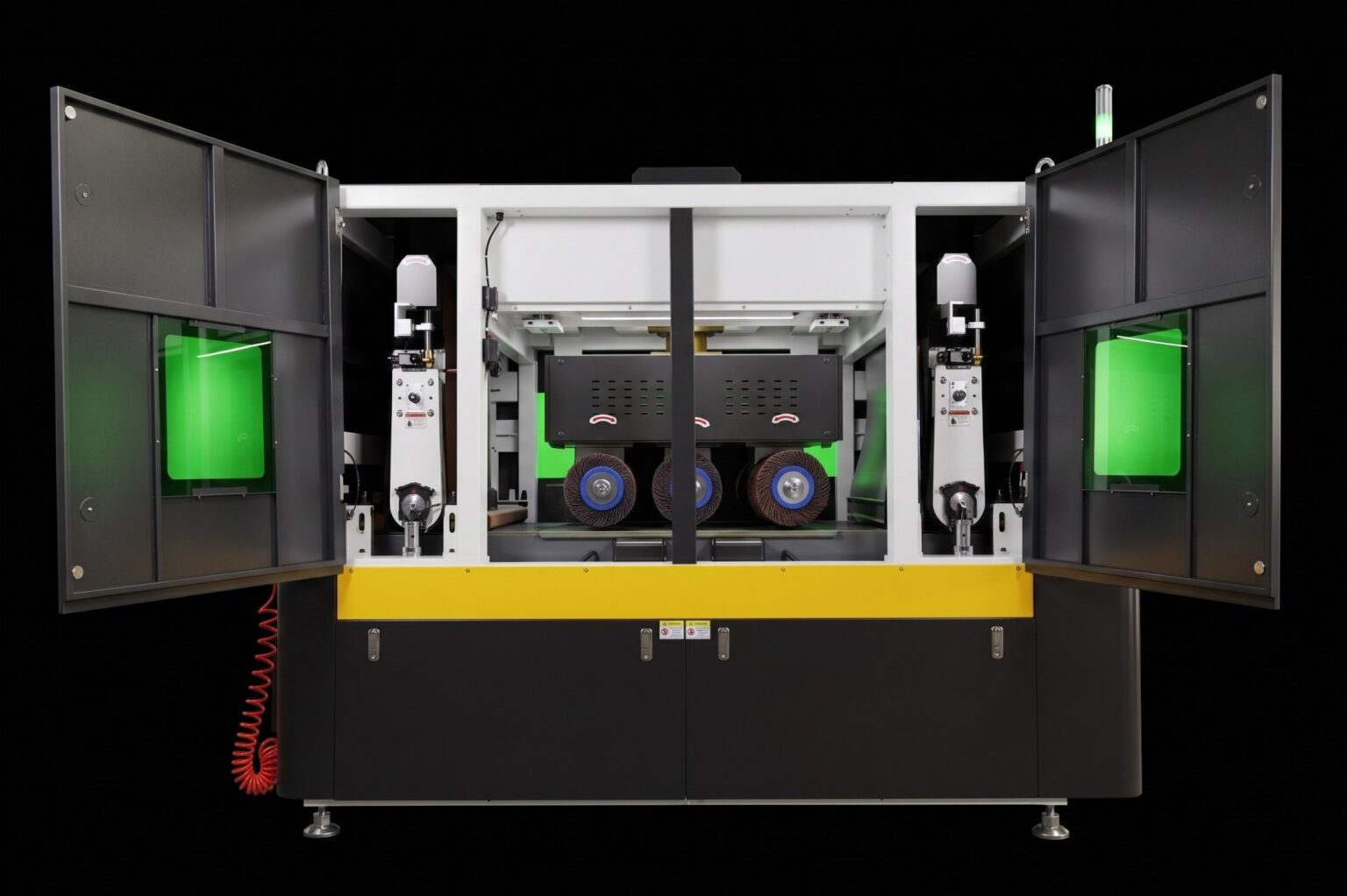
Opening a thorough overview pertaining to computerized machines fabricated purposed for deburring feature transformed engineering operations, affording major positive effects regarding swiftness and finish. This article examines the several types of deburring solutions, consisting of abrasive spinning units, spinning appliances, and sophisticated programmed solutions. We will outline the positives of implementing these systems, such as decreased labor costs, better assembly regularity, and greater workshop performance.
Outline Chamfering Instruments: Definite Processing Clarified
Perimeter polishing systems offer a refined solution for realizing meticulous improving on workpieces. As opposed to manual procedures, these intelligent platforms deliver equal effects and markedly strengthen output efficiency. Such systems regularly deploy several scraping gadgets like revolving burrs, lapping abrasives, or unique contours to clear sharp tips and spurs. These method is fundamental in a ample set of markets, encompassing flight and instrumentation.- Improve coating caliber
- Lessen workshop spending
- Amplify turnover and operation
Dross Elimination Mechanisms: Ensuring Untainted, Top-Notch Coatings
Contemporary steelmaking procedures predictably yield significant amounts of dross, a byproduct that, if overlooked, can severely reduce the standard of the end result. Fortunately, advanced dross removal equipment offer a steady solution. These exclusive machines, employing techniques like abrasion, are designed to completely eliminate this unwanted material, ensuring a unblemished and top-tier surface. The resulting improvements include cut rejection rates, augmented aesthetic appeal, and an overall gain in production efficiency. By utilizing leading slag removal technology, manufacturers can consistently deliver superior surfaces and meet stringent norms.
Sheet Metal Polishing: The Benefits of Deburring Devices
Accomplishing a excellent surface on sheet metal units is vital for capability, and deburring devices extend notable advantages over human-operated methods. Removing burrs speedily not only improves the aesthetic quality of the article, but also prevents anticipated damage during fabrication and usage. Besides, automated deburring procedures advance output times and lower personnel spending.
Boosting Sheet Metal Production with Automatic Deburring
For the purpose of improve capability in sheet metal fabrication, evaluate intelligent deburring solutions. Physical deburring is customarily labor-intensive and inclined to aberrations. Switching to digital deburring supplies significant improvements, containing cut personnel expenses, heightened assembly standards, and increased cycle times. These commitments can rapidly deliver value.Identifying the Appropriate Deburring Instrument for Your Application
Identifying the finest deburring tool for your customized needs comprises a careful assessment of several elements. To begin with, review the classification of element you're tackling – alloy requires varied techniques than thermoplastic. Next, consider the dimensions and configuration of the pieces needing surface cleaning. At last, contemplate your fabrication quantity; a heavy-duty operation commands a distinct type of equipment than a limited one. Overlooking to consider these elements might cause poor results and additional expenses.
Deburring Unit Process: Changes and Improvements
Up-to-date edge-removal unit process is experiencing rapid expansion, stimulated by the calls for for enhanced quality and productivity in routines steps. Noteworthy movements feature the integration of digital machines for adjustable edge-removal workflows, alongside breakthroughs in surface treatment process. We're likewise detecting a surge in handheld refining machines suited for specialized processes, and cutting-edge techniques like thermal finishing are gaining acceptance. The prospect demonstrates towards increased integration of burr removal devices within the smart industrial site setting.
Refining Ferrous Section Integrity with Edge Smoothing
Many fabrication processes for brass parts introduce sharp edges, which can cause stress clusters and flaws that weaken overall lifespan. Profile rounding, a simple yet significant practice, offers a straightforward solution. It demands slightly rounding the severe edges of a part during the fabrication stage. This moderates stress zones, raises operational durability, and can prevent breaking. Benefits are further amplified when dealing with difficult forms or parts subjected to considerable stress. Considerations include the correct curvature of the fillet and its result on attachment with other pieces.
- Cuts down Stress Accumulates
- Enhances Performance Ability
- Avoids Breaking
Byproduct Removal vs. Deburring : Knowing the Separations
While many operators use Edge Finishing the designations “slag cleaning” and “deburring” as if they were the same, they mean distinct workflows in metal industrial methods. Edge cleanup focuses on cutting away the sharp, often tiny, burrs created during machining operations—these are excess fragments of non-ferrous left on the segment. Residuum removal, conversely, addresses this waste – typically a blend of contaminants – that arises during processes like fabricating. Essentially, deburring deals with superfluous edges, while slag clearing deals with a residue of a distinct method. In brief, programmable deburring and residuum removal apparatuses are key components of modern metal production that support exceptional finished products with limited defects and strengthened efficiency.Finalizing this article asserts the notable role of high-tech automated deburring technologies in boosting construction guidelines and driving businesses secure augmented productivity and precision.