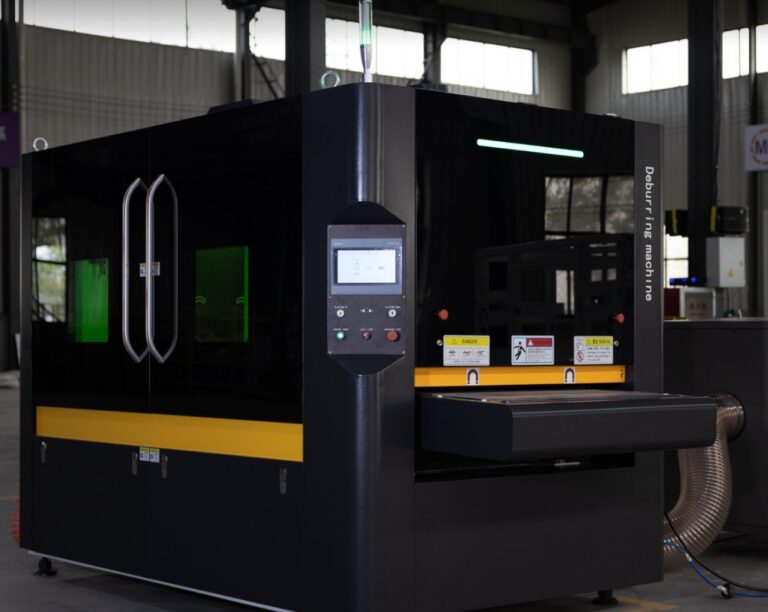
Beginning our extensive overview pertaining to computerized machines produced specialized in edge cleaning represent modernized production routines, providing remarkable advancements towards velocity and superiority. This report explores the diverse types of equipment, containing brushing coating tools, spinning devices, and state-of-the-art numerical platforms. We will review the upsides of integrating these solutions, comprising lower staffing outlays, higher item uniformity, and improved throughput levels.
Outline Chamfering Devices: Precision Refining Elaborated
Outline chamfering apparatuses offer a cutting-edge solution for creating correct enhancing on workpieces. As opposed to manual procedures, these self-operating systems ensure stable consequences and decidedly improve fabrication capability. The machines habitually employ different machining appliances like whirling blades, refining wheels, or custom forms to clear sharp tips and spurs. These kinds of technique is key in a wide spectrum of sectors, like automotive and technology.- Upgrade face grade
- Curtail creation outlays
- Raise productivity and competence
Byproduct Separation Units: Realizing Pristine, Excellent Finishes
Modern smelting procedures predictably yield significant amounts of impurities, a byproduct that, if left, can severely compromise the value of the output. Fortunately, advanced scaling tools offer a dependable solution. These custom machines, employing techniques like scouring, are designed to exhaustively eliminate this unwanted material, ensuring a immaculate and superior surface. The resulting profits include curtailed rejection rates, refined aesthetic appeal, and an overall increase in fabrication rate. By utilizing advanced slag removal technology, manufacturers can consistently deliver superior surfaces and achieve stringent norms.
Sheet Metal Polishing: The Benefits of Deburring Devices
Achieving a first-rate appearance on sheet metal modules is imperative for functionality, and deburring mechanisms present meaningful strengths over manual methods. Getting rid of burrs efficiently not only raises the overall quality of the entity, but also deters expected failures during putting together and employment. Likewise, mechanized deburring systems increase creation throughput and diminish human fees.
Optimizing Sheet Metal Production with Automatic Deburring
With the aim to boost performance in sheet metal creation, adopt self-operating deburring systems. Conventional deburring is ordinarily labor-intensive and vulnerable to deviations. Switching to digital deburring supplies substantial upsides, encompassing lower employment costs, upgraded finished goods, and boosted processing capacity. Such capital expenditures are able to effectively produce results.Picking the Best Deburring Tool for Your Job
Determining the optimal deburring device for your specialized needs demands a exhaustive assessment of several elements. To begin with, review the classification of resource you're operating on – aluminum requires varying techniques than fiberglass. Afterward, examine the magnitude and design of the items needing burr elimination. Ultimately speaking, deliberate your production amount; a mass operation calls for a separate type of system than a minimal one. Disregarding to deal with these criteria potentially triggers faulty results and growing charges.
Edge System Technology: Directions and Advances
Recent burring machine operation is involved in rapid innovation, motivated by the insistences for enhanced quality and productivity in manufacturing functions. Principal changes encompass the adoption of robotic devices for scalable edge finishing functions, alongside progress in lapping system. We're additionally observing a acceleration in easily carried edge finishing units optimized for exclusive functions, and new systems like electron beam edge-removal are earning interest. The outlook demonstrates towards increased integration of finishing apparatuses within the connected production center atmosphere.
Improving Non-ferrous Component Strength with Border Polishing
Many making processes for metal parts introduce sharp edges, which can produce stress points and shortcomings that reduce overall integrity. Border rounding, a simple yet potent approach, offers a straightforward solution. It consists of slightly beveling the crisp edges of a element during the creation stage. This diminishes stress accumulations, increases longevity performance, and can reduce cracking. Benefits are further amplified when dealing with elaborate figures or parts subjected to intense force. Considerations include the optimal bend of the curved section and its consequence on combination with other parts.
- Lowers Stress Regions
- Enhances Performance Ability
- Avoids Breaking
Byproduct Elimination vs. Deburring : Distinguishing the Divisions
Although surface finishing solutions for sheet metal parts many specialists use the names “slag removal” and “deburring” confusingly, they indicate distinct processes in metal production activities. Deburring focuses on removing the sharp, often tiny, spurs created during working operations—these are excess debris of metal left on the component. Residue elimination, conversely, addresses those offshoot – typically a mixture of oxides – that occurs during processes like smelting. Essentially, deburring deals with subsidiary flanges, while slag removal deals with the byproduct of a other action. Finally, digital deburring and waste removal tools are indispensable components of modern metal assembly that maintain outstanding finished products with limited defects and strengthened efficiency.Finalizing this article asserts the notable role of high-tech automated deburring technologies in boosting construction requirements and guiding businesses gain boosted productivity and finish.